WILDLY FREE ELDER
The Artistry of Aging
In A Time of Destruction…

Nature Park, Weaverville, NC/Photography by Gaye Abbott
“In a time of destruction, create something. A poem. A parade. A community. A school. A vow. A moral principle. One peaceful moment.“
~Maxine Hong Kingston
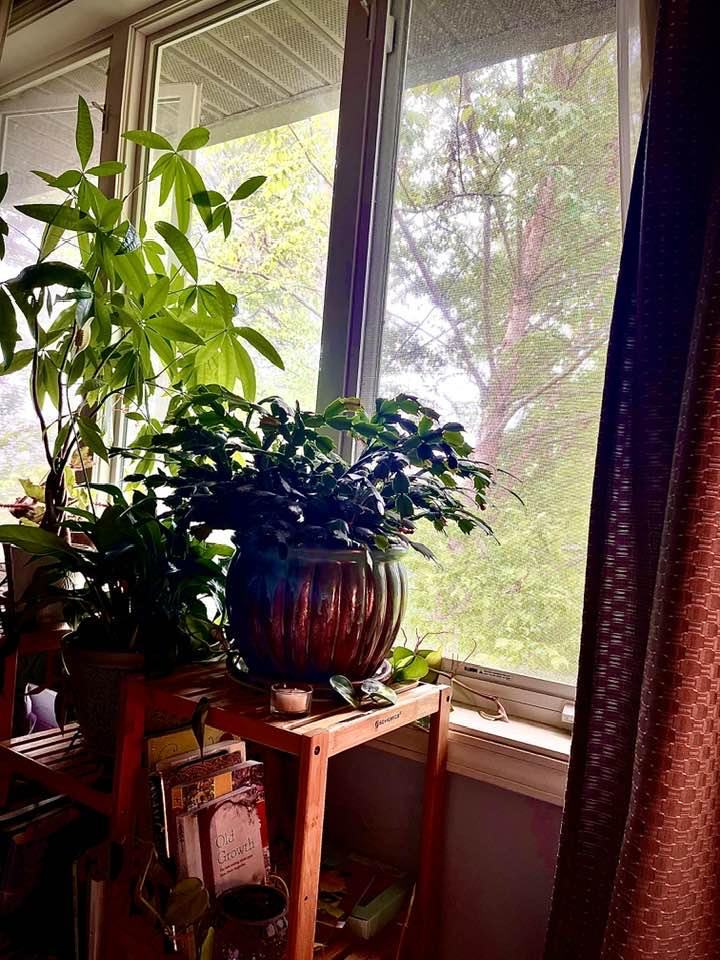
I sit here looking out at the flowing River Birch outside my bedroom window with squirrels playing acrobatics across her limbs, taking in the symphony of birdsong and periodic cicadas unique to the Eastern U.S., the lush landscape of Western N. Carolina, and the relatively peaceful ambiance of a small Southern Blue Ridge Mountain town. This is my world in this moment.
When I started this post it was in my mind to dialog on “destruction and creation”. How there is a continuous dance between the two. However, yesterday I spoke to a very dear friend who lives in Edinburgh, Scotland who had just returned from western Ukraine in Lviv, close to the border of Poland, on an art/culture consulting project. His narrative about his experience dropped me down several depths into what I have never experienced first hand, but that millions of people in war torn countries experience every day. I was shaken by his first hand reflections on his experience.
To see hundreds of newly dug graves, witness one funeral procession after another down the main streets of the city, amputees navigating on crutches in town, to learn that mandatory conscription for males 25-60 was enforced, and that 25,000 Ukranian children had been taken by Russians to their country to possibly never be returned to their families.
As I understand through my friend, this area of Western Ukraine has not suffered direct bombing and destruction as other areas have but the psychological, emotional and physical impact of destruction is definitely there for the people of Ukraine, and will be for generations to come in this area not without air raid shelters. My friend was there to consult with the artists in multiple areas of endeavor on preserving and enhancing the culture and art that means so much to them. Their hospitality towards my friend was stunning. The desire for creation out of destruction compelling.

I share this with you not to point fingers at one country or another or discuss the devastation, inhumanity and morality of war, but as a reminder that one of the paths to healing from destruction is indeed creation. Nature does this constantly as I saw first hand post Hurricane Helene last September that hurled this area into devastation. The trauma is still held within the people and landscape here and the destruction will in some cases take generations to repair as with the downed trees. But out of this natural disaster has come the creativity and resilience to rebuild and to strengthen community.
Another example from nature, the Brood XIV periodical cicadas here in this area of Western N. Carolina right now that were mentioned above, are constantly present with their high pitched mate attracting sound during the day. Unlike annual cicadas, which appear every summer, periodical cicadas spend 13 or 17 years (depending on the species) underground as nymphs, feeding on tree roots.
After spending most of their life underground, (17 in this particular brood) they emerge en masse to molt, mate, and lay eggs before dying within a few weeks. Laying their eggs on the ends of tree branches before dying, those branches fall off delivering the nymphs onto the ground where they burrow back underground. The broken branches serve as natures way of pruning as new growth comes back to the trees in the Spring and the nymphs repeat the cycle of their parents. Creation, destruction/death and regeneration.
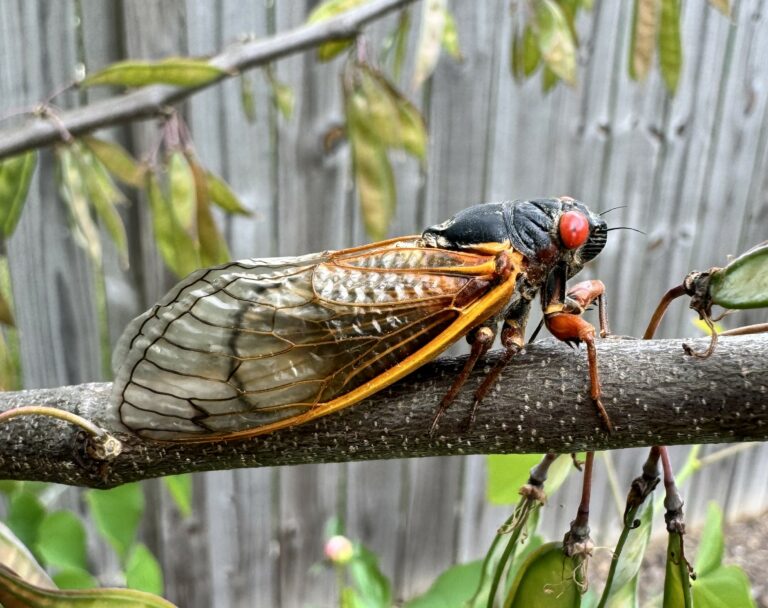
Periodic Cicada
It might be easy, and at times compelling, to concentrate our attention on the destruction happening in almost every facet of human and nature based life on this amazing interconnected planet of ours. Our media constantly broadcasts the negative and destructive forces in our face without any restriction or hesitation. Destruction is nothing new to the millions of years of life on this planet.
Yet, if we focus exclusively there we not only lose ourselves but forget what our contributions and offerings might be to the world. We forget that creation can be an antidote to destruction, opening pathways for our resilience and adaptability to dramatic changes and trauma. Does indeed arise out of destruction like a phoenix rising from the ashes.
Some would say it is a matter or perception. Like the post below by Eric Alan on Spacious, Not Desolate. Can we shift our perspective enough to shift destruction into creation or desolation into spaciousness?
It is not always easy….but we can find our way together.
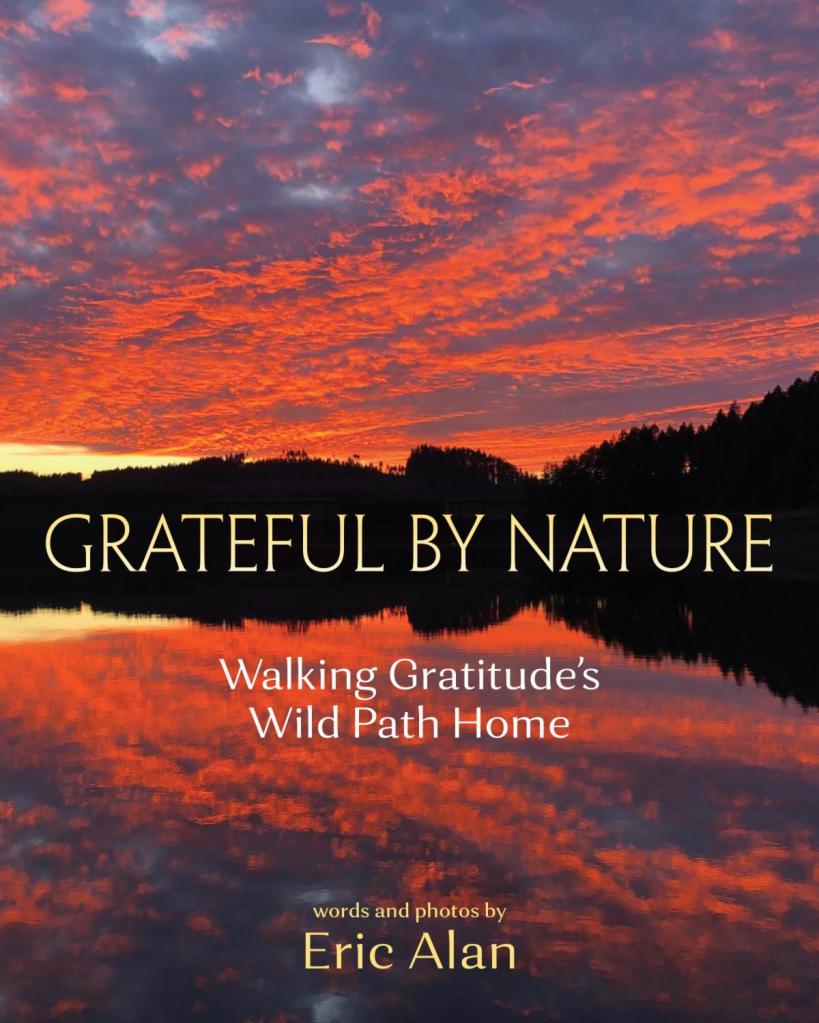
| Spacious, Not Desolate by Eric Alan I’m driving south through landscapes some would call desolate, though I prefer to see them as spacious. I’ve left the dry lands of eastern Washington, where I’ve been assisting my partner in caring for her elderly mother after an injurious fall. I see herds of wild horses that populate the hills. I pass through outposts too tiny to earn the name “town.” I see surreal wind farms, their giant sleek windmills towering over the Columbia Gorge. I cross that great river, a natural feature that serves as the artificial border between Washington and Oregon. I slip south through the wide open landscape, changing states of mind as well as states on the map. This part of eastern Oregon is nearly a desert, though snow-capped mountains are in full view from too many miles away to even estimate. I see a ranch for sale so large—sixty-six thousand acres—that it takes me twenty minutes to pass the line of “for sale” signs. The scales of distance out here are vast. They give me beautiful room to breathe, roll, absorb family changes and challenges. The scales of distance within me become spaciously vast as well. I focus on a relativistic driving meditation that’s been part of my gratitude practice for many years: I am sitting still. The world is moving by me. No sight compels me to pause until I almost pass an abandoned church, sitting just off the roadside in another tiny outpost. After a moment’s hesitation nearly becomes a decision to continue south, I ease off the empty two-lane road and circle back to park near that old church. I think it might be Sunday, but I’m retired enough to not need to know. In any case, no congregation has come to congregate. The bell is missing from the tower. The stained glass is gone too. A slight breeze blows through the empty window frames; also through gaps in the roof where missing shingles have opened the inner church to the wider sky. Even the trees nearby are apparently dead. I look at the strange dignity and majesty of it all and think again: Spacious, not desolate. Lately I’ve been surrounded by stories of decline. Declining health in aging. Declining civility in society. Declining number of animals and plants in endangered species. Declining faith in the future of humanity, and in greater spirit beyond. And I decline to argue with any of those perceptions of decline, as stark as the evidence for many declines have been. Still, I look again at the missing church windows, then notice the grass silently restarting to grow up around it all. Spacious, not desolate. The persistent grass and grace remind me of a card I kept on my desk for many years. Barn’s burned down. Now I can see the moon. The inside of that card was blank, and I preferred it that way. I’d bought it as a remembrance, rather than to send to anyone. I have no idea what happened to that card now, but the perspective it gave me remains. Spacious, not desolate. I’ve had to learn to see spaciousness, in order to celebrate my own declining future, to which this moment will someday inevitably lead. I’ve had to learn to let the landscape within mirror the landscape beyond, especially in times when my inner life felt desolate. I’ve learned that we’re all spacious too, even then. There is room then for new life to grow, in forms beyond our imagination; forms we have no ability or need to control. Seeing spaciousness instead of desolation gives me faith in the persistence of nature and spirit. Yet neither faith nor belief are even needed, to notice the beauty within even our most difficult days. Nature’s steady ability to express new forms of vibrant growth is larger than all of our viewpoints combined. It transcends our times of decline and passing. I see all that in one abandoned church, built by people with a religion I don’t know, in a time I didn’t experience, in a place I’ll never live. And if I’m the only congregation this morning, no matter. Others will join over time, at a distance, in a place and way I’ll never see, to celebrate life’s persistence and regrowth—just as you do now in joining me in this moment. Spacious, not desolate. As I leave the church behind, I celebrate that it’s always this way. The light on the distant mountains is newly enlightening, ever changing across the miles. Eric Alan is an author, photographer, meditation and workshop leader who has contributed to the Celebrate What is Right With the World project since 2011. His new book Grateful by Nature is now available from Wild Grace Press. His previous books include Wild Grace: Nature as a Spiritual Path, Grace and Tranquility, and This Is Our Time!. More information at http://www.ericalan.com, and eric@wildgrace.org. |
Thank You for being a subscriber to Wildly Free Elder posts – or finding your way here through synchronicity! Through 2025 there will be regular posts on the 15th and 30th of each month. Please feel free to contact me with your thoughts, reflections and wild creative endeavors to inspire others. Gaye Abbott (click here)**
If you don’t want to miss future posts simply sign up for the blog here: https://wildlyfreeelder.wordpress.com/blog/ *When you receive your email remember to click on the title in order to see all images and videos posted on the post website.
Please note that all blog posts can be seen on the HOME page by clicking on the Blog Archives tab.
Gaye Abbott, Wildly Free Elder, 06/03/25
 WILDLY FREE ELDER